

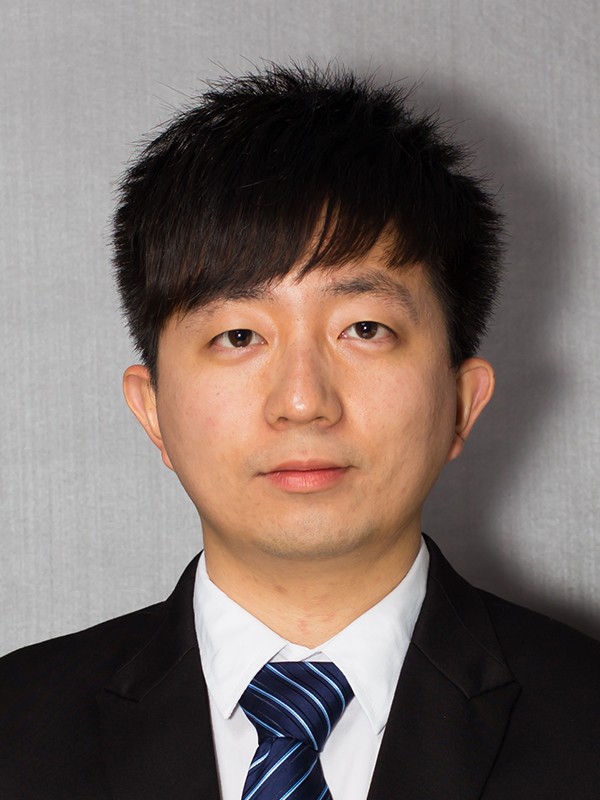
 刘桐
刘桐

|
个人信息Personal Information
副教授
博士生导师
硕士生导师
性别:男
毕业院校:大连理工大学
学位:博士
所在单位:物理学院
办公地点:厚义楼310
电子邮箱:
个人简介Personal Profile
刘桐:副教授、博士生导师
长期专门从事磁约束核聚变的理论和数值模拟以及实验研究。在托卡马克磁流体不稳定模式、快粒子物理、磁流体与漂移波湍流相互作用等方面取得了一定的研究成果。目前已在国际重要期刊发表论文40余篇(其中一作及通讯作者18篇,其中包括6篇一作领域内顶级期刊Nuclear Fusion)。主持国家自然科学基金2项、国家磁约束聚变能发展研究专项课题1项(850万元)、国际合作与交流项目1项、中国博士后基金面上资助1项等。作为核心成员参与了具有自主知识产权的三维磁流体程序MHD@Dalian Code的开发工作,作为第一开发者为磁流体与双流体两个版本程序开发了ECCD控制模块,并申请了相关的软件著作权与专利。依托自主平台首次自洽模拟验证了普林斯顿Reiman教授与Fisch教授的射频电流凝聚理论,获其高度评价。首创多模三维磁流体频谱(M3DS)技术,突破传统方法效率瓶颈,首次实现毫秒级多模增长率定量提取并为美国现役最先进托卡马克装置DIII-D等离子控制系统开发了实时控制程序。目前授权发明专利10余项(包括2项美国专利),并先后获得2022年日内瓦国际发明展银奖、2024年日内瓦国际发明展金奖。在国内外重要学术会议(AAPPS-DPP, APS-DPP, ITPA-MHD等)中作邀请报告10余次,口头报告多次。
教育经历:
[1] 2015 – 2020 博士(大连理工大学)
[2] 2019 – 2020 联合培养博士(普林斯顿大学)
[3] 2011 – 2015 学士(大连理工大学)
研究团队与中国科学院合肥等离子体物理研究院、核工业西南物理研究院、国际热核聚变实验堆(ITER)组织(法国)、美国普林斯顿大学等离子体物理实验室(PPPL)、美国通用原子能公司(GENERAL ATOMICS)等多家国内外著名团队均有紧密合作关系,加入我们团队的同学们有充分的国内、国际合作交流和出国留学的机会(CSC定向项目支持)。
非常欢迎对等离子体物理感兴趣的同学加入团队。
近年论文列表(部分):
[1] T. Liu, S. Munaretto, N.C. Logan, Z.R. Wang, M.D. Boyer, Z.X. Wang*, E. Keith, and J.-K. Park “Real time detection of multiple stable MHD eigenmode growth rates towards kink/tearing modes avoidance in DIII-D tokamak plasmas” Nucl. Fusion 64, 016025 (2024).
[2] T. Liu, Z.X. Wang*, L. Wei, J.L. Wang and A.H. Reiman “Enhancement of ECCD by the current condensation effect for stabilizing large magnetic islands caused by neoclassical tearing modes in tokamak plasmas” Nucl. Fusion 64, 036001 (2024).
[3] T. Liu, Z.X. Wang*, L. Wei, and J.L. Wang “Prevention of electron cyclotron current drive triggering explosive bursts in reversed magnetic shear tokamak plasmas for disruption avoidance” Nucl. Fusion 62, 056018 (2022).
[4] T. Liu, Z.R. Wang, M.D. Boyer, S. Munaretto, Z.X. Wang*, B.-H. Park, N.C. Logan, S.M. Yang, and J.-K. Park “Identification of multiple eigenmode growth rates towards real time detection in DIII-D and KSTAR tokamak plasmas” Nucl. Fusion 61, 056009 (2021).
[5] T. Liu, J.L. Wang, L. Wei* and Z.X. Wang “Control of multi-helicity neo-classical tearing modes by electron cyclotron current drive in tokamak plasmas” Nucl. Fusion 60, 106009 (2020).
[6] T. Liu, Z.X. Wang*, J.L. Wang and L. Wei “Suppression of explosive bursts triggered by neoclassical tearing mode in reversed magnetic shear tokamak plasmas via ECCD” Nucl. Fusion 58, 076026 (2018).
[7] T. Liu, L. Wei, F. Wang*, and Z.X. Wang “Coriolis force effect on suppression of neo-classical tearing mode triggered explosive burst in reversed magnetic shear tokamak plasmas” Chin. Phys. Lett. 38, 045204 (2021).
[8] T. Liu, H. Li, W.K. Tang, and Z.X. Wang* “Intelligent control for predicting and mitigating major disruptions in magnetic confinement fusion” iEnergy 1, 2 (2022).
[9] H.Y. Wang, T. Liu*, Y.Q. Liu, and Z.X. Wang* “Effects of plasma boundary shape on βN threshold in the suppression of tearing mode in toroidal tokamak plasmas with reversed magnetic shear” Plasma Phys. Control. Fusion 64, 085005 (2022)
[10] H.Y. Wang, Z.X. Wang, T. Liu* and X.L. Zhu “Effects of plasma boundary shape on explosive bursts triggered by tearing mode in toroidal tokamak plasmas with reversed magnetic shear” Chin. Phys. Lett. 40, 075201 (2023).
[11] Z.X. Wang*, T. Liu, and L. Wei “Nonlinear evolution and control of neo-classical tearing mode in reversed magnetic shear tokamak plasmas” Rev. Mod. Plasma Phys. 6, 14 (2022)