

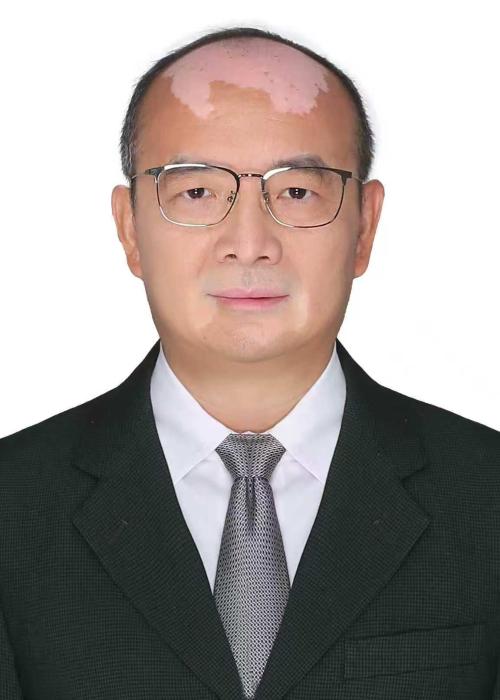
 向程
向程

|
个人信息Personal Information
教授
博士生导师
硕士生导师
性别:男
毕业院校:美国耶鲁大学
学位:博士
所在单位:信息与通信工程学院
联系方式:
电子邮箱:
个人简介Personal Profile
向程,大连理工大学信息与通信工程学院教授,国家级领军人才。
教育背景
1991年复旦大学应用力学学士
1994年中国科学院力学研究所力学硕士
2000年美国耶鲁大学电气工程博士
工作经历
2000-2001年美国房利美公司,金融工程师
2001-2025年新加坡国立大学电气与计算机工程系,历任助理教授、副教授
2019-2025年新加坡国立大学电气与计算机工程系,控制、智能系统与机器人研究中心主任
学术服务与荣誉
曾任IEEE控制系统学会新加坡分会主席
爱尔兰科学基金委外部评审专家
国际会议ICCA组委会主席
曾多次受邀在极负盛名的耶鲁大学“自适应与学习系统”研讨会做主题报告
主要国际奖项:
IEEE ICCA 2020 最佳学生论文奖
2024 IAAI 部署应用奖
研究领域与理念
向程教授长期深耕于人工智能、智能控制系统与机器人技术、系统生物学等前沿领域。其研究成果在多机器人协同控制、精准医疗和微电网能量管理等国家战略需求领域具有重大应用价值。
向程教授科研工作的长期目标,是探究具身智能三个最重要核心要素——感知、学习与控制——所涉及的基础性问题。他秉持开放的研究态度,不局限于单一方向,对所有与这三个基本要素相关的有价值的基础问题均保持浓厚兴趣。这一治学理念深受其博士导师、耶鲁大学Narendra教授的影响。Narendra教授既是自适应控制的奠基人,也是神经网络控制的开创者,其在稳定性理论、自适应控制、学习理论与神经网络等多个领域均产生了深远影响。
沿承Narendra教授的学术精神,向程教授在围绕具身智能的感知、学习与控制三大核心技术领域,做出了一系列具有深远影响的独创性工作。
代表性论著
(一) 智能控制方向
1. Yakun Li, Shuhua Gao, Yiming Gao, Jianliang Wu, Jun-e Feng, Cheng Xiang,“Robust Controllability of Boolean Control Networks via Dynamic Programming,”IEEE Trans. on Neural Networks and Learning Systems, vol. 36, no. 9, pp. 17448 – 17461, 2025.
2. Fenglan Wang, Lijun Long and Cheng Xiang,“Switching event-triggered adaptive neural network control for switched nonlinear systems under hybrid attacks,”IEEE Trans. on Systems, Man, and Cybernetics: Systems, vol. 54, no. 10, pp. 6093 - 6102, 2024.
3. Fenglan Wang, Lijun Long and Cheng Xiang,“Event-Triggered State-Dependent Switching for Adaptive Fuzzy Control of Switched Nonlinear Systems,”IEEE Trans. on Fuzzy Systems, vol. 32, no. 4, pp. 1756-1767, 2024.
4. S. Gao, C. K. Sun, C. Xiang, K.R. Qin and T.H. Lee,“Finite-Horizon Optimal Control of Boolean Control Networks: A Unified Graph-Theoretical Approach,”IEEE Trans. on Neural Networks and Learning Systems, vol. 33, no. 1, pp. 157-171, 2022.
5. S. Gao, C. K. Sun, C. Xiang, K.R. Qin and T.H. Lee,“Infinite-Horizon Optimal Control of Switched Boolean Control Networks with Average Cost: An Efficient Graph-Theoretical Approach,”IEEE Trans. on Cybernetics, vol.52, no. 4, pp. 2314-2328, 2022.
6. Y. Yang, C. Xiang, S. Gao and T.H. Lee, “Data-driven Identification and Control of Nonlinear Systems using Multiple NARMA-L2 Models,” Int. J. Robust and Nonlinear Control, vol. 28, no. 12, pp. 3806-3833, 2018.
7. C. Xiang, L.L. Cao, Q.G. Wang and T.H. Lee, "General Framework for Delay Compensation for Input‑Delay Systems via Predictive Control Design,” Control & Intelligent Systems, vol. 39, no. 2, pp.129–140, 2011.
8. C.Y. Lai, C. Xiang and T.H. Lee, "Data-based Identification and Control of Nonlinear Systems via Piecewise Affine Approximation,” IEEE Trans. on Neural Networks, vol. 22, no. 12, pp.2189–2200, 2011.
9. C. Yang, S.S. Ge, C. Xiang, T.Y. Chai and T.H. Lee, "Output Feedback NN Control for two Classes of Discrete‑Time Systems with Unknown Control Directions in a Unified Approach,” IEEE Trans. on Neural Networks, vol. 19, no. 11, pp. 1873‑1886, 2008.
10. K.S. Narendra and C. Xiang, "Adaptive Control of Discrete‑time Systems Using Multiple Models,” IEEE Trans. on Automatic Control, AC‑45, no. 9, pp. 1669‑1686, 2000.
(二) 系统感知与机器学习方向
1. J Wang, H Zhu, H Guo, A A Mamun, C Xiangand T. H. Lee “EPSegFZ: Efficient Point Cloud Semantic Segmentation for Few-and Zero-Shot Scenarios with Language Guidance,”Proceedings of the AAAI Conference on Artificial Intelligence,vol. 40, no. 12, pp. 9885-9893, 2026.
2. J Wang, H Zhu, H Guo, A A Mamun, C Xiangand T. H. Lee “SingRef6D: Monocular Novel Object Pose Estimation with a Single RGB Reference,”Proceedings of 39th Conference on Neural Information Processing Systems (NeurIPS 2025).
3. Jiahui Wang, Haiyue Zhu, Haoren Guo, Abdullah Al Mamun, Cheng Xiang, Clarence W de Silva, Tong Heng Lee, “SDSimPoint: Shallow–Deep Similarity Learning for Few-Shot Point Cloud Semantic Segmentation,” IEEE Trans. on Neural Networks and Learning Systems, vol. 36, no. 6, pp. 10043 -10056, 2025.
4. S. Gao, C. Xiang, M. Yu, K.T. Tan and T.H. Lee,“Online Optimal Power Scheduling of a Microgrid via Imitation Learning,”IEEE Trans. On Smart Grid, vol. 13, no. 2, pp. 861-876, 2022.
5. Yiting Li, Haiyue Zhu, Yu Cheng, Wenxin Wang, Chek Sing Teo, Cheng Xiang, Prahlad Vadakkepat, Tong Heng Lee, “Few-Shot Object Detection via Classification Refinement and Distractor Retreatment,” Proceedings of the IEEE/CVF Conference on Computer Vision and Pattern Recognition (CVPR), pp. 15395-15403, 2021.
6. B. Ramesh, H. Yang, G. M. Orchard, N. A. L. Thi, S. Zhang and C. Xiang ,“DART: Distribution Aware Retinal Transform for Event-based Cameras,”IEEE transactions on pattern analysis and machine intelligence, vol. 42, no. 11, pp. 2767-2780, 2019.
7. B. Ramesh, C. Xiang, and T. H. Lee, “Shape classification using invariant features and contextual information in the bag-of-words model,” Pattern Recognition, vol. 48, no. 3, pp. 894-906, 2015.
8. W. Gu, C. Xiang, Y. V. Venkatesh, D. Huang and H. Lin, “Facial Expression Recognition using Radial Encoded Local Gabor Features and Classifier Synthesis,” Pattern Recognition, vol. 45, no. 1, pp. 80-91, 2012.
9. C. Xiang, C. Y. Png and S. M. Lim, "Design of Multiple‑Level Hybrid Classifier for Intrusion Detection System using Bayesian Clustering and Decision Trees,” Pattern Recognition Letters, vol. 29, no. 7, pp. 918‑924, 2008.
10. E.J. Teoh, K.C. Tan and C. Xiang, "Estimating the Number of Hidden Neurons in a Feedforward Network Using the Singular Value Decomposition,” IEEE Trans. on Neural Networks, vol. 17, no. 6, pp. 1623‑1629, 2006.
11. C. Xiang, X.A. Fan and T.H. Lee, "Face Recognition Using Recursive Fisher Linear Discriminant,” IEEE Trans. On Image Processing, vol. 15, no. 8, pp. 2097‑2105, 2006.
12. C. Xiang, S.Q. Ding and T.H. Lee, "Geometrical Interpretation and Architecture Selection of MLP,” IEEE Trans. on Neural Networks, vol. 16, pp. 84‑96, 2005.
(三) 系统生物学方向
1. S. Gao, C. Sun, C. Xiang, K.R. Qin, and T.H. Lee, “Learning Asynchronous Boolean Networks from Single-Cell Data using Multi-Objective Cooperative Genetic Programming,” IEEE Trans. on Cybernetics, vol. 52, no. 5, pp. 2916-2930, 2022.
2. Z. Z. Chen, W. M. Yuan, C. Xiang, D. P. Zeng, B. Liu and K.R. Qin, "A microfluidic device with spatiotemporal wall shear stress and ATP signals to investigate the intracellular calcium dynamics in vascular endothelial cells,” Biomechanics and Modeling in Mechanobiology, vol. 18, no. 1, pp.189-202, 2019.
3. S. Gao, C. Xiang, K.R. Qin, and C. Sun, “Mathematical Modeling Reveals the Role of Hypoxia in Promotion of Human Mesenchymal Stem Cell Long-Term Expansion,” Stem Cells International, Volume 2018, Article ID 9283432, 2018.
4. Y.X. Wang, C. Xiang, B Liu, Y. Zhu, Y. Luan, S. T. Liu and K.R. Qin, " A Multi-component Parallel-plate Flow Chamber System for Studying the Effect of Exercise-induced Shear Stress on Endothelial Cells,” Biomedical Engineering Online, Vol. 15, no.2, pp. 659-672, 2016.
5. L.F. Li, C. Xiang, and K.R. Qin, "Modeling of TRPV4-C1-mediated calcium signaling invascular endothelial cells induced by fluid shear stress and ATP,” Biomechanics and Modeling in Mechanobiology, vol. 14, no. 5, pp. 979-993, 2015.
6. L.F. Li, C. Xiang, Y.B. Zhu and K.R. Qin, " Modeling of progesterone-induced intracellular calcium signaling in human spermatozoa,” J. of Theoretical Biology, vol. 351, no. 6, pp. 58-66, 2014.
7. J. Hu, K.R. Qin, C. Xiang and T.H. Lee, “Modeling of Hysteresis in Gene Regulatory Networks,”Bulletin of Mathematical Biology, vol. 75, no. 8 , pp. 1727‑1753, 2012.
8. K.R. Qin and C. Xiang, "Hysteresis Modeling for Calcium‑mediated Ciliary Beat Frequency in Airway Epithelial Cells,”Mathematical Biosciences, vol. 229, no. 1 , pp. 101‑108, 2011.
9. K.R. Qin, C. Xiang and L.L. Cao, "Dynamic Modeling for Flow‑Activated Chloride‑Selective Membrane Current in Vascular Endothelial Cells,” Biomechanics and Modeling in Mechanobiology, vol. 10, no. 5, pp.743-754, 2011.
10. K.R. Qin, C. Xiang, Z. Xu, L.L. Cao, S.S. Ge and Z.L. Jiang, "Dynamic Modeling for Shear Stress Induced ATP Release from Vascular Endothelial Cells,”Biomechanics and Modeling in Mechanobiology,vol. 7, no. 5, pp.345‑353, 2008.